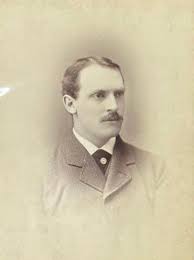
 Theodore Salisbury Woolsey (October 22, 1852 – April 24, 1929) was an American jurist, educator, and professor of international law.
Queer Places:
Yale University (Ivy League), 38 Hillhouse Ave, New Haven, CT 06520
Grove Street Cemetery, New Haven, New Haven County, Connecticut, USA
Theodore Salisbury Woolsey (October 22, 1852 – April 24, 1929) was an American jurist, educator, and professor of international law.
Born in New Haven, Connecticut, he was the son of Theodore Dwight Woolsey, who served as the president of Yale College. Entering Yale College at the young age of fifteen, Woolsey initially lived at home in relative seclusion due to youthful frailty before graduating in 1872. He then proceeded directly to Yale Law School, earning his LL.B. in 1876 after winning a prize for a dissertation on civil law.
In 1877, Woolsey was appointed an instructor in public law at Yale College, and by 1878, he became a professor of international law at the Yale Law School, a post he held until his retirement in 1911. He also served as the acting dean of the Yale Law School from 1901 to 1903. He was an influential figure in bringing public awareness to the importance of international relations and international law in the United States.
Beyond academia, Woolsey overcame early health struggles to become a keen sportsman, big-game hunter, and extensive traveler. He developed a passionate interest in American colonial silver and ironwork, writing about antiques and decorative arts, and served effectively on the New Haven board of park commissioners.
He married Annie Gardner Salisbury on October 22, 1877, with whom he had two sons, Theodore Salisbury Woolsey Jr. and Heathcote Muirson Woolsey.
Theodore Salisbury Woolsey was elected to the Horace Walpole Society in 1910.
Established in 1909 and formally organized in early 1910, the Horace Walpole Society is an exclusive, historically all-male organization dedicated to the study and appreciation of American decorative arts, architecture, and history. Membership comprises dedicated scholars, collectors, antiquarians, and museum professionals who share a deep interest in Americana and historical preservation, aligning closely with Woolsey's personal scholarly pursuits in early American silver and craftsmanship.
Biographical data and historical records place Woolsey within documentation compiled around queer history and historical social networks (such as archival studies focusing on historical figures, spaces, and elite networking groups like the Horace Walpole Society).
References:
Support this project
This website is a passion project researched, developed, and funded entirely by me. If you find the content valuable and would like to help support the ongoing research and hosting costs, any contribution is deeply appreciated.
Thank you for keeping this independent resource alive!
My books on Amazon: Elisa Rolle's books